16 May 2026
1. The Core Ruling (May 2026)
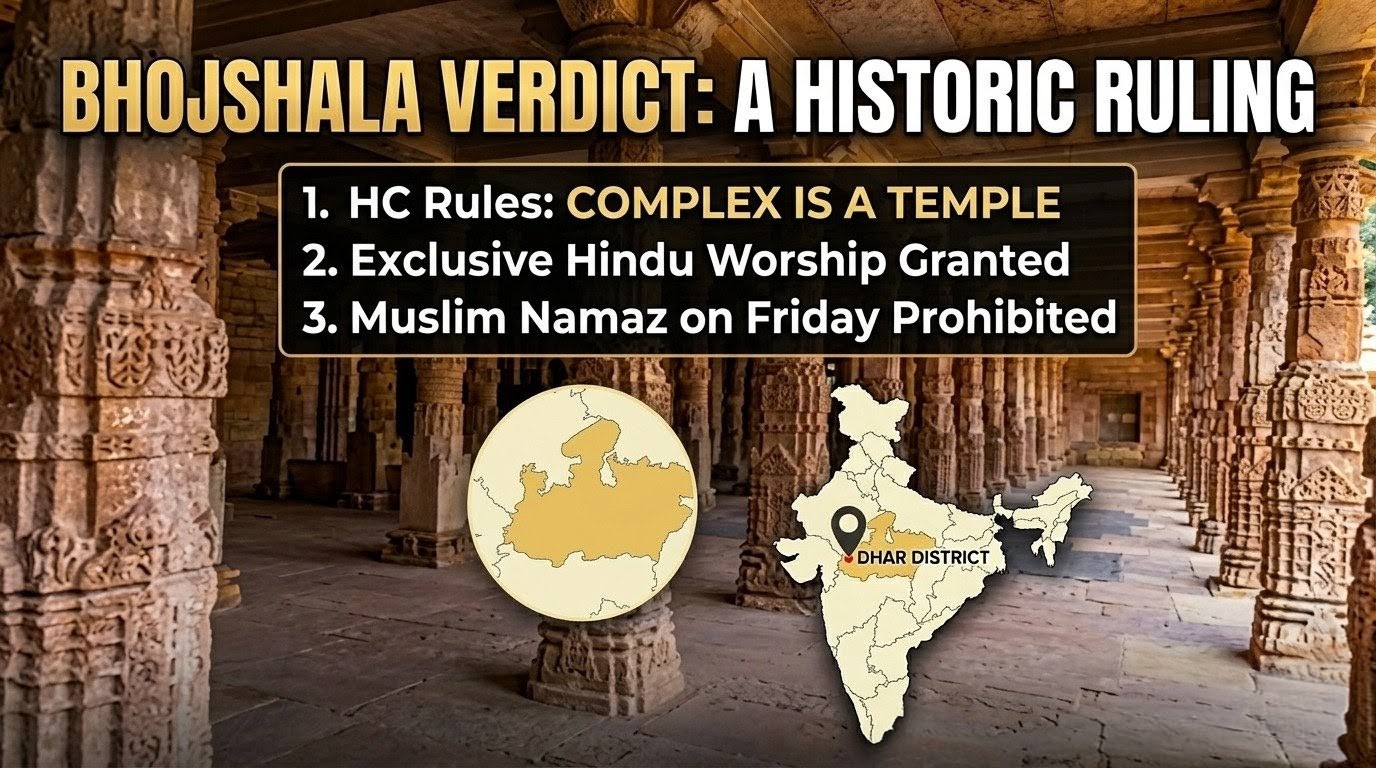
Judicial Decision: The Indore Bench of the Madhya Pradesh High Court ruled that the disputed 11th-century Bhojshala-Kamal Maula Mosque complex in Dhar is a Hindu temple dedicated to Goddess Vagdevi (Saraswati).
Quashing of 2003 Order: The court struck down the April 2003 Archaeological Survey of India (ASI) arrangement that divided access (Hindus on Tuesdays/Basant Panchami; Muslims on Fridays).
Exclusive Worship Rights: The Hindu community has been granted continuous daily rights to perform worship rituals at the site; Friday namaz is no longer permitted.
2. Key Legal & Scientific Evidence
ASI Scientific Survey: The judgment relied heavily on a multi-volume ASI report utilizing advanced techniques (carbon dating, GPR, XRF spot analysis, and palaeography).
Structural Findings: The survey concluded that the current standing structure was constructed centuries later using the dismantled, recycled remains of an 11th-century monumental complex from the Paramara dynasty.
Recovered Artefacts: Excavations revealed sculptures and iconography representing Hindu deities (Ganesha, Brahma, Narasimha, Hanuman, Krishna) alongside Jain Tirthankara imagery. Reused basalt pillars showed Arabic/Persian inscriptions carved on older temple components.
Historical Continuity: The court recorded that the site historically served as a Bhojshala (a prominent center for Sanskrit learning) under Raja Bhoj, and noted that the continuity of Hindu worship at the site had never been legally extinguished.
3. Key Directives Issued by the Court
Administration & Upkeep: The court handed over full supervisory control, conservation, and regulation of religious access to the ASI and directed the Central Government to manage the site as a Bhojshala temple and Sanskrit learning center.
Repatriation of the Deity: The Union Government has been directed to consider active representations to bring back the original Pratima (idol) of Goddess Saraswati/Vagdevi, currently housed in the British Museum in London, and re-establish it at the site.
Alternate Land for Mosque: To secure religious equity, the court stated that the state government may consider allocating an alternate, suitable piece of land within Dhar district for the Muslim community to construct a mosque.
4. Constitutional & Jurisprudential Grounding
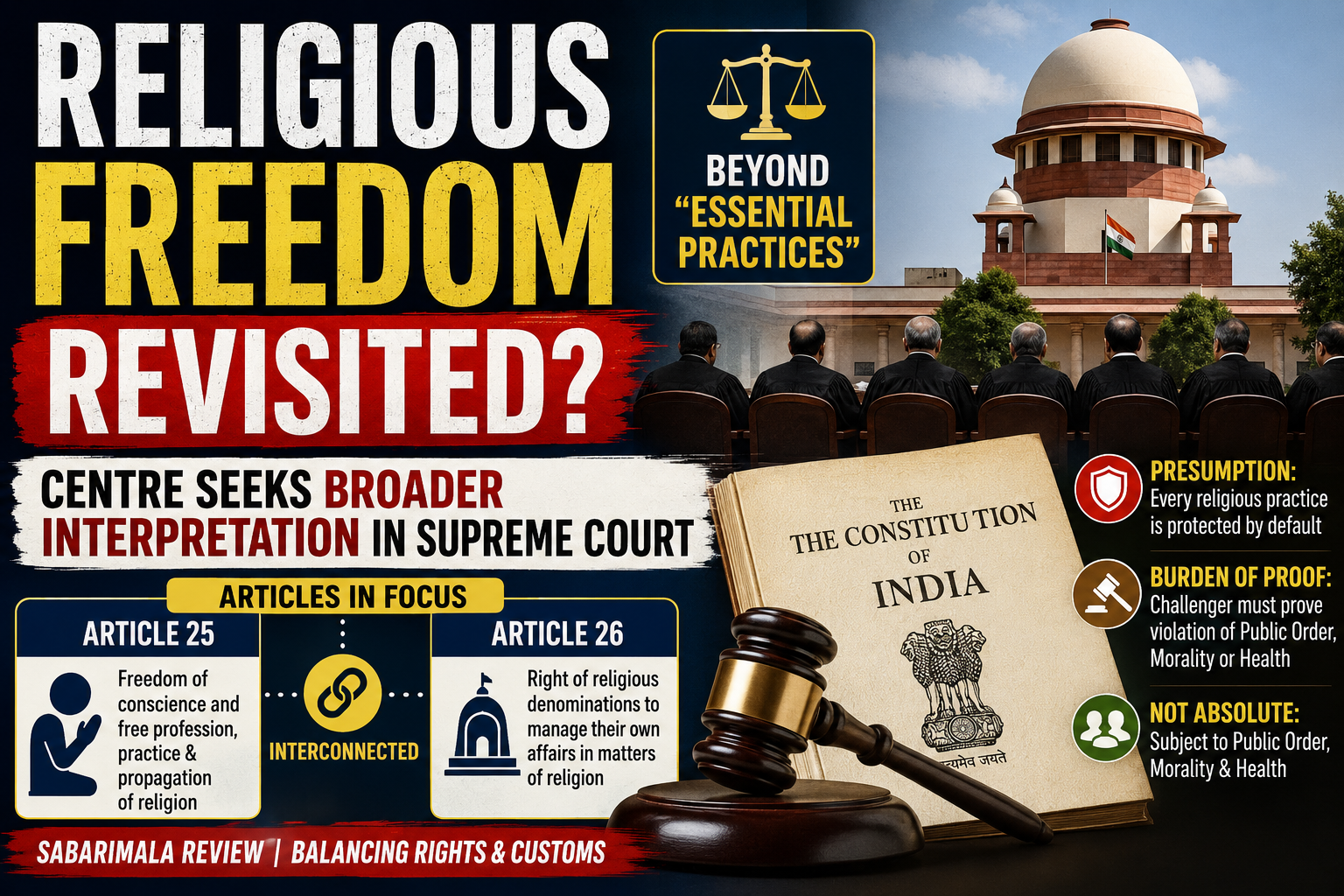
Articles 25 & 26 Alignment: The Bench noted that under the Constitution, the State has an obligation to protect ancient monuments of historical and spiritual significance, including the preservation of the sanctum sanctorum and the purity of the deity.
Ayodhya Principles: The 242-page judgment drew from the 10 principles of the Supreme Court's Ram Janmabhoomi verdict, reiterating that courts can safely rely on multidisciplinary, transdisciplinary archaeological studies when determining the historical character of a site.
Rejection of the 1935 Proclamation: The court dismissed the Muslim side's reliance on a 1935 official proclamation (Ailaan) by the princely State of Dhar naming it a mosque, noting it lacked legal validity as the site was already a protected monument under the 1904 Ancient Monuments Preservation Act.
 Study Sarthi