Daily Current Affairs

Stay ahead with organized updates across various categories.

Clear
India April 2026 Exports Rise to $43.6B Amid Trade Diversification

India April 2026 Exports Rise to $43.6B Amid Trade Diversification

16 May 2026
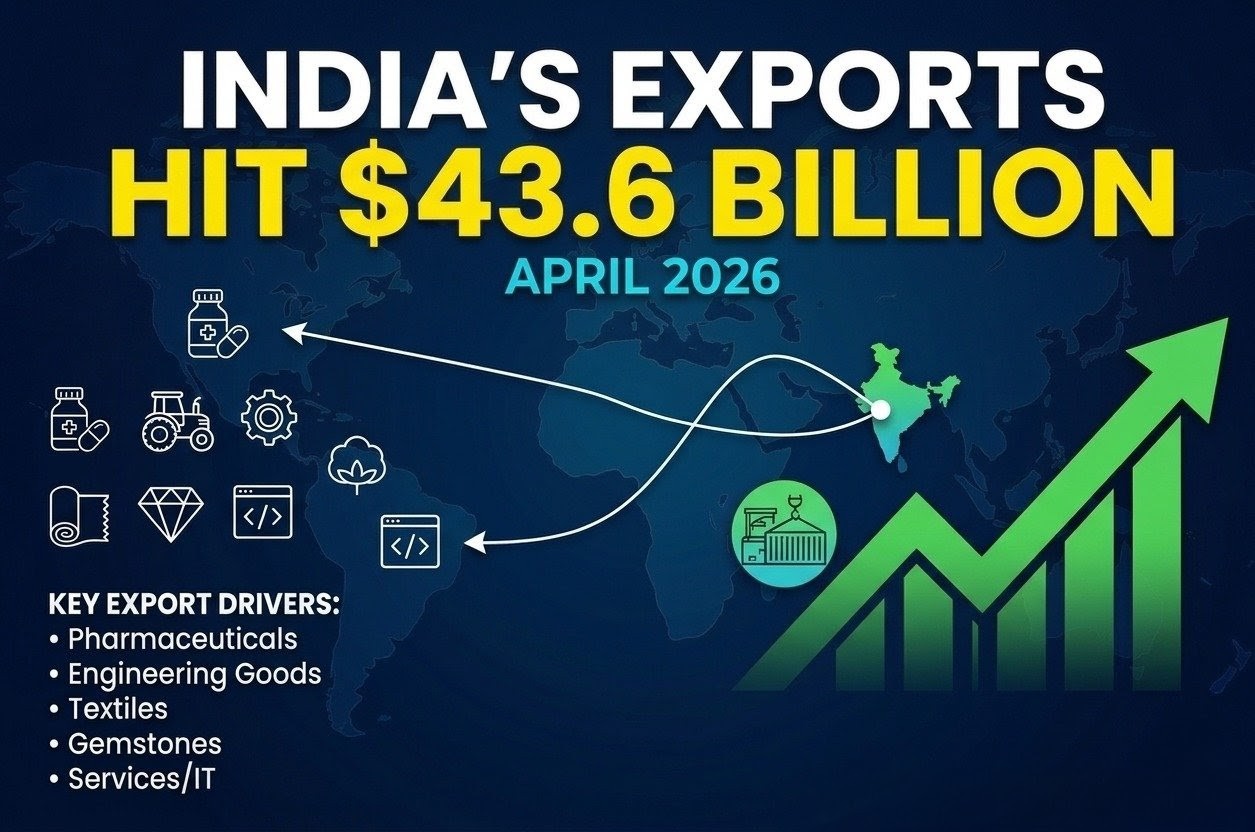
India’s April 2026 merchandise exports grew 14% to $43.6B. Driven by market diversification and strong services, the overall trade deficit fell 30% to $7.8B. Trade Performance 1. Data Merchandise Trade: Exports grew ~14% to $43.6 billion (vs $38.3B in April 2025); Imports rose to $71.9 billion. Services Trade: Exports jumped to $37.2 billion; Imports marginally dipped to $16.7 billion. Net Deficit: The overall trade deficit (Goods + Services) shrank by 30% to $7.8 billion, thanks to a strong services surplus cushioning the goods deficit. 2. Core Trends & Drivers Price Effect: Rising global commodity prices artificially boosted the nominal value of exports. Supply Resilience: Industry successfully maintained domestic supply chains despite global maritime bottlenecks. Market Diversification: Exporters hedged risks by shifting focus to non-traditional and historically smaller destinations. 3. Shift in Export Destinations India recorded massive growth spikes in alternate markets to counter traditional slowdowns: Asia-Pacific & Neighborhood: Sri Lanka (+215%), Singapore (+179%), Bangladesh (+64%), and Vietnam (+53%). Africa: Exports to Tanzania surged 158% to reach $1.2 billion. 4. Geopolitical Shock: West Asia Crisis Regional conflict heavily depressed trade volumes along traditional Middle Eastern/Red Sea routes: Exports to West Asia: Dropped 28% to $4.16 billion. Imports from West Asia: Fell 31.6% to $10.5 billion (reflecting lower/disrupted energy and raw material inflows). 5. Key Takeaways Services as a Macro Buffer: The widening gap in merchandise trade is systematically absorbed by India's structural strength in service exports, keeping the overall external balance stable. Volume vs. Value: Growth driven by global price inflation is a temporary cushion. Long-term export stability requires scaling up real cargo volumes, lowering logistics overheads, and expediting bilateral trade pacts. Transit Vulnerabilities: The sharp drop in West Asian trade underlines India's extreme exposure to strategic maritime chokepoints, stressing the urgency for viable, multi-modal transport corridors.
Fuel Price Hike and Windfall Tax Rationalization

Fuel Price Hike and Windfall Tax Rationalization

16 May 2026
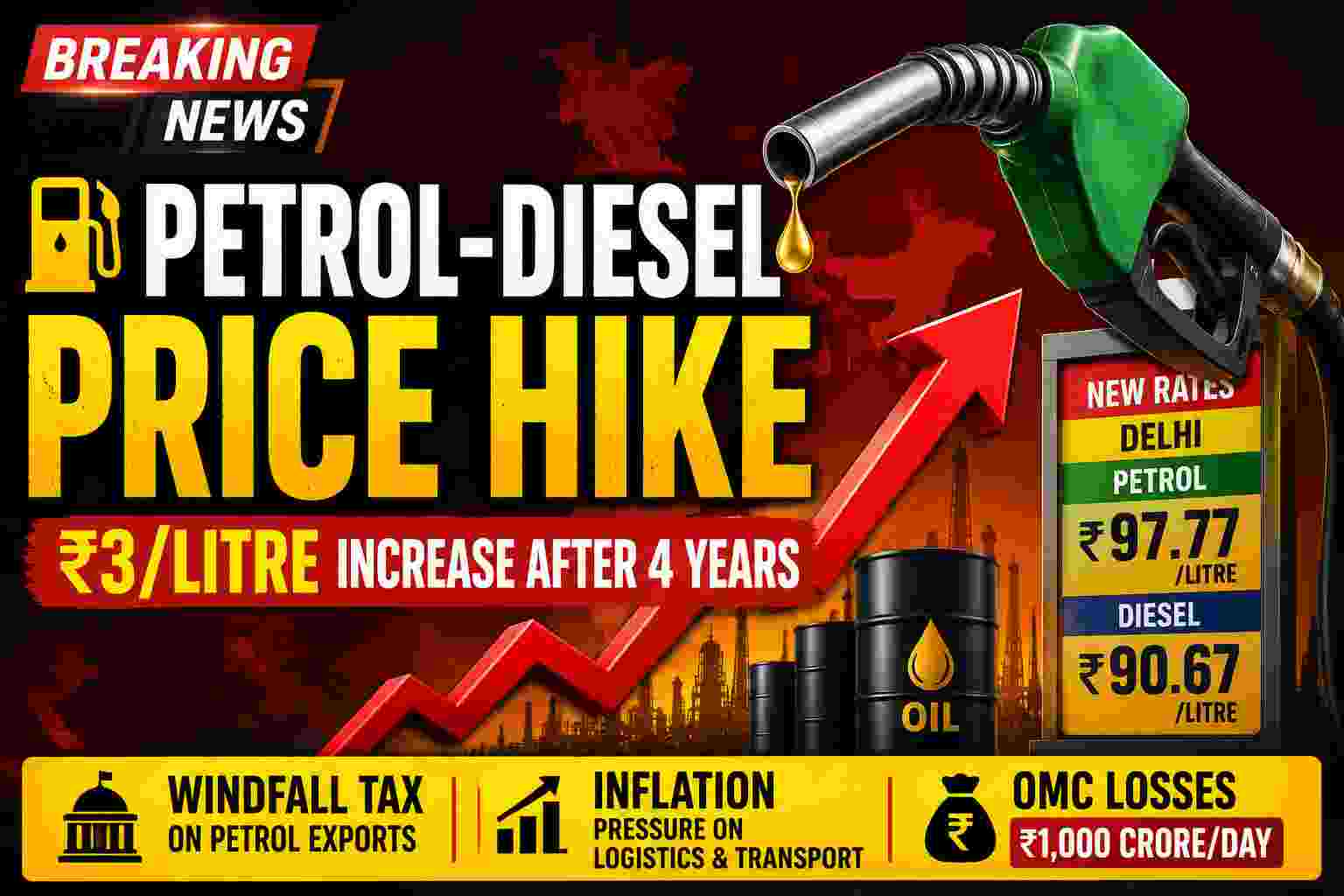
1. Context Retail Hikes: Petrol and diesel prices hiked by ₹3 per litre across all variants. Compressed Natural Gas (CNG) prices increased by ₹2 per kg. Historical Context: This marks the first major retail fuel price hike (defined as >₹1/litre) in over four years, since the staggered ₹9 hike following the March 2022 Russia-Ukraine conflict. New Base Rates (Delhi): * Regular Petrol: ₹97.77 / litre Regular Diesel: ₹90.67 / litre 2. Fiscal Measures: Windfall Tax Adjustments Simultaneously, the Central Government restructured the windfall gains tax regime to regulate outbound shipments and domestic availability: Petrol Exports: New windfall tax of ₹3 per litre imposed. Diesel Exports: Levy reduced to ₹16.5 per litre. Aviation Turbine Fuel (ATF): Levy reduced to ₹16 per litre. 3. Under-Recoveries & OMC Financial Strain The Macro Loss: Prior to this decision, State-run Oil Marketing Companies (OMCs like IOCL, BPCL, HPCL) were bearing combined losses of approximately ₹1,000 crore per day across petrol, diesel, and LPG. Global Catalysts: Severe upstream financial pressure caused by global crude oil spikes, soaring freight rates, and supply-chain re-routing born out of the ongoing conflict in West Asia. The Fiscal Gap: Structural under-recoveries stood at ₹13–15/litre for petrol and ₹17–18/litre for diesel. Experts note the ₹3 hike is only a partial buffer; a ₹10 per litre hike is required to bridge even 50% of the OMCs' true under-recoveries. 4. Strategic Multi-Dimensional Impact Consumer Inflation Risks: While a ₹3 hike offers a breather to corporate OMC balance sheets, it introduces cascading input-cost pressures across logistics, public transport, and agricultural supply chains. Demand-Side Management: Aligns with the political executive’s recent public push urging citizens to voluntarily curb fuel consumption to ease India's high crude import bill. The "Export vs Domestic" Balance: Imposing a windfall tax on petrol exports acts as a regulatory disincentive for domestic refiners private or public to prioritize lucrative international markets over domestic fuel pumps during a global energy crunch. What is Windfall Tax? A windfall tax is a higher, temporary tax levied by a government on specific companies or industries that have experienced sudden, exceptionally high, and unexpected profits. These extraordinary gains are called "windfalls" because they do not result from any strategic investment, expansion, or sudden business innovation by the company itself. Instead, they are entirely driven by external economic shocks or geopolitical events beyond the company's control. 1. Why Do Governments Impose It? Redistributing Excess Wealth: It ensures that companies profiting massively from a crisis contribute a fair portion back to the economy, rather than keeping all the gains. Funding Public Relief: The extra revenue generated is often channeled directly into funding public welfare programs, infrastructure development, or consumer subsidies to ease the burden of the crisis on the general public. Fiscal Balancing: It provides governments with emergency revenue during times of crisis (such as wars or high import bills) without having to raise regular taxes on ordinary citizens.
India bans Sugar Exports till Sept 30

India bans Sugar Exports till Sept 30

15 May 2026
India has tightened sugar export rules by moving sugar from the “restricted” category to the “prohibited” category for exports until September 30, 2026. This means exporters generally cannot ship sugar abroad without special exemptions. Key points from the notification Export of raw, white, and refined sugar is banned. The restriction will remain in force till 30 September 2026. Some exceptions remain: Exports to the United States and European Union under quota systems (CXL and TRQ) Exports under the Advance Authorisation Scheme Government-to-government export deals Shipments already in process before the notification Why did the government take this step? The main reason is concern over lower-than-expected sugar production in the current 2025–26 sugar season. The Indian Sugar and Bio-energy Manufacturers Association (ISMA) had earlier estimated: Total sugar production: 324 lakh tonnes Sugar diverted for ethanol: 31 lakh tonnes Net sugar production: 293 lakh tonnes However, production later weakened in major sugar-producing states like: Maharashtra Uttar Pradesh This reduced the overall output outlook. What does this mean for India? The decision is mainly aimed at: Protecting domestic sugar availability Preventing price spikes in the local market Ensuring enough sugar supply for both consumers and ethanol blending programs India has increasingly been diverting sugarcane toward ethanol production as part of its fuel blending strategy, which also affects sugar availability. Possible impact Domestic sugar prices may remain more stable. Global sugar supply could tighten slightly because India is one of the world’s largest sugar exporters. Sugar mills may face reduced export opportunities, though ethanol production still offers revenue support.
WPI Inflation Jumps to 8.3% in April 2026

WPI Inflation Jumps to 8.3% in April 2026

15 May 2026
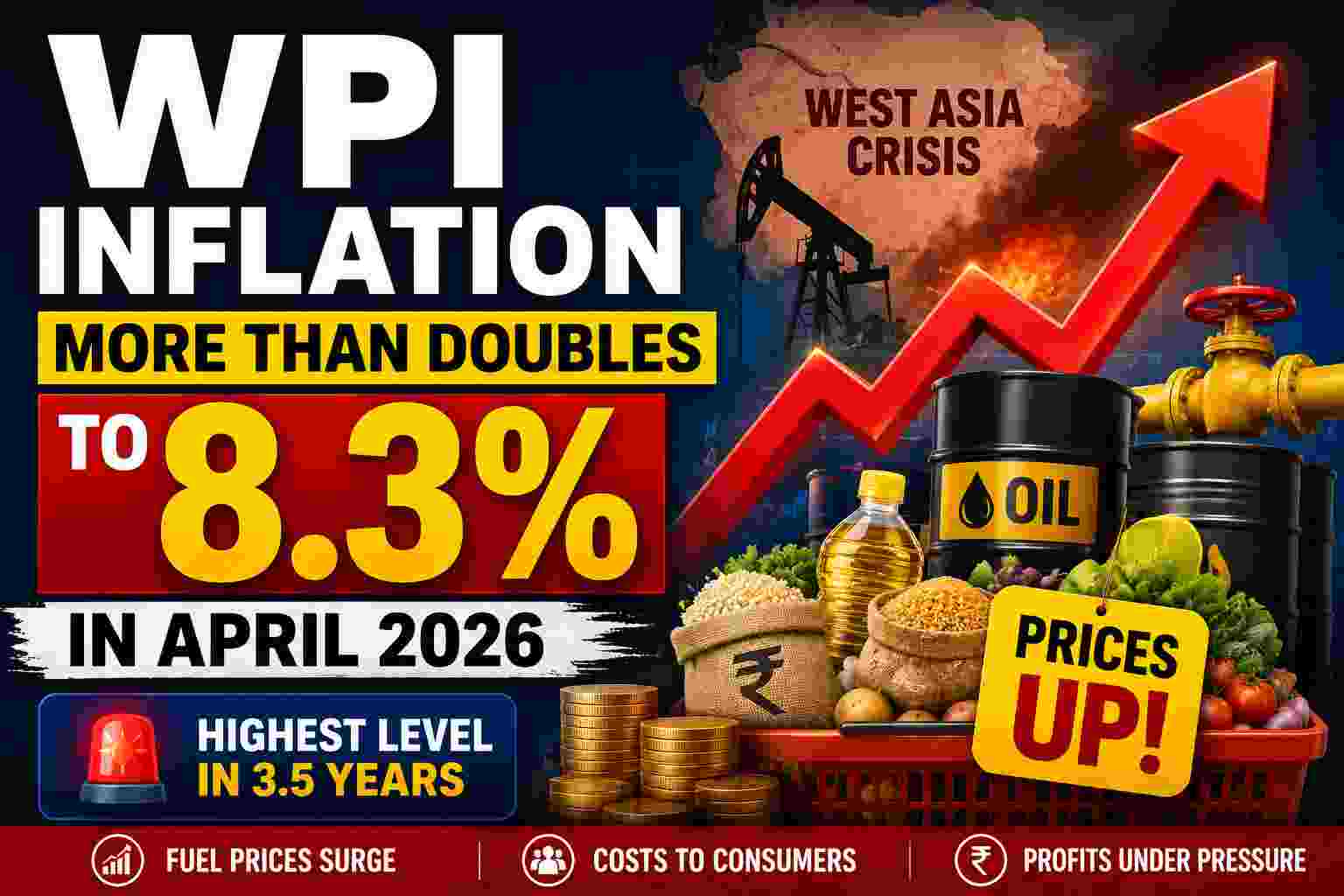
India’s wholesale inflation, measured by the Wholesale Price Index (WPI), rose sharply to 8.3% in April 2026, the highest level in the last 3.5 years. The main reason behind this rise is the increase in crude oil and natural gas prices due to tensions in West Asia. According to data released by the Ministry of Commerce and Industry, WPI inflation was only 3.9% in March 2026. The sharp increase shows the growing impact of global events on the Indian economy. The biggest rise was seen in the crude oil and natural gas sector, where inflation touched 67.2% in April. Fuel and power inflation also increased to 24.7%. Experts say higher fuel prices increase transportation and production costs, which can later make everyday goods more expensive for consumers. Companies may also face lower profits if they are unable to pass these rising costs to customers. However, food inflation at the wholesale level remained low at around 2%, giving some relief. Why is this important? Shows the impact of global conflicts on India’s economy Higher fuel prices may increase prices of daily-use goods Could raise retail inflation in coming months May affect profits of manufacturing companies Key Points WPI inflation rose to 8.3% in April 2026. Highest wholesale inflation in 3.5 years. Crude oil and gas prices were the main reason. West Asia tensions affected global energy prices. Food inflation remained relatively low.
PLFS 2025 Highlights Rise in Jobs and Women Workforce Participation

PLFS 2025 Highlights Rise in Jobs and Women Workforce Participation

15 May 2026
The recently released Periodic Labour Force Survey (PLFS) 2025 highlights important changes in India’s employment situation. Every year, nearly 7–10 million young Indians enter the labour market, making job creation and skill development critical for the country’s economic future. According to the report, India’s Labour Force Participation Rate (LFPR) reached 59%, while the unemployment rate remained low at 3%. Youth unemployment has also declined compared to 2024, showing improvement in both rural and urban areas. One of the biggest positive trends is the rise in women’s participation in the workforce. Female labour participation, especially in rural areas, increased steadily during 2025. The report also shows improvement in the quality of jobs, as regular salaried employment increased from 22% to 24%, while dependence on self-employment slightly declined. Women’s earnings also improved across salaried jobs, self-employment, and casual labour. However, gender wage gaps still remain a major concern. Women continue to earn less than men in most sectors. The report also points towards structural changes in the economy. Agriculture’s share in employment has declined, while manufacturing and services are creating more opportunities, especially for young people and women. Despite these positive developments, several challenges continue: Many graduates still struggle to find jobs after completing higher education. Only a small percentage of people have formal vocational or technical training. Women often leave the workforce because of childcare and household responsibilities. Around 25% of youth aged 15–29 belong to the NEET category (Not in Education, Employment, or Training). Experts suggest that India must focus on skill development, apprenticeships, women-friendly workplace policies, and expansion of stable salaried jobs to fully utilise its demographic dividend. Why is this important? Shows India’s employment and unemployment trends Highlights progress in women’s workforce participation Explains challenges in job creation and skill training Important for understanding India’s demographic dividend Key Points PLFS 2025 shows unemployment rate at 3%. Labour Force Participation Rate reached 59%. Women’s participation in workforce improved. Manufacturing and services sectors are growing. Skill gaps and NEET youth remain major concerns.
India Hikes Import Duty on Gold and Silver

India Hikes Import Duty on Gold and Silver

14 May 2026
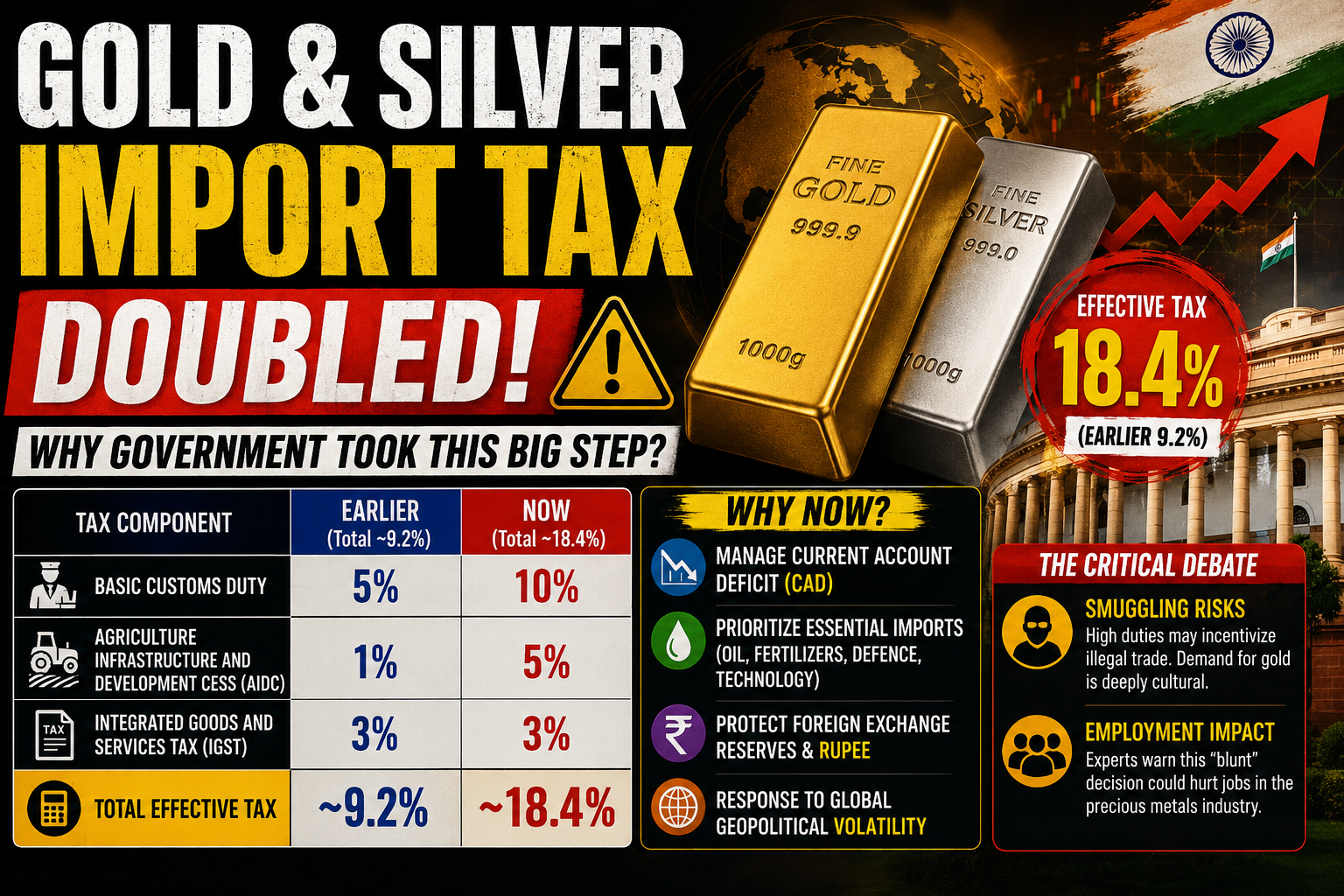
The Indian government has significantly increased the effective tax on the import of gold and silver to manage the country's economic stability amidst global geopolitical tensions. This move is a critical topic for students tracking India's fiscal policy and external sector management. The Core Change The effective tax rate on gold and silver imports has doubled to curb non-essential outflows of foreign exchange. New Effective Tax: 18.4% (increased from the previous 9.2%). Implementation: The changes took effect on Wednesday following two notifications issued by the Centre. Key Components: The hike involves raising the Basic Customs Duty from 5% to 10% and the Agriculture Infrastructure and Development Cess (AIDC) from 1% to 5%. Tax Component Previous Rate New Rate Basic customs duty 5% 10% Agriculture Infrastructure and Development Cess (AIDC) 1% 5% Integrated Goods and Services Tax (IGST) 3% 3% Total Effective Tax ~9.2% ~18.4% Economic Rationale (Why now?) The government's decision is a strategic response to several external and internal pressures: Current Account Deficit (CAD) Management: The decision was taken to address the impact of the West Asia crisis on India’s CAD—the gap where total imports exceed exports. Resource Prioritization: The government is focusing its foreign exchange reserves on "essential imports" such as crude oil, fertilizers, defense requirements, and critical technologies. Currency & Inflation Protection: By reducing gold imports, the government aims to protect India's foreign exchange reserves and the rupee exchange rate. Geopolitical Volatility: Instability in global crude oil markets and shipping routes has increased India's vulnerability to supply-side disruptions. Key Terms for Students Term Definition in Context Current Account Deficit (CAD) The margin by which a country's total imports of goods and services exceed its exports. AIDC Agriculture Infrastructure and Development Cess; a tax aimed at raising funds for agricultural infrastructure. IGST Integrated Goods and Services Tax; applied to the total assessable value of imports (Cost + Insurance + Freight + Customs Duty). Prudent Management The strategic prioritization of national resources during volatile geopolitical situations. The Critical Debate While the government views this as "prudent management," industry experts have raised concerns: Smuggling Risks: High duties may incentivize illegal trade, as Indian demand for gold is deeply "cultural" and unlikely to drop significantly. Employment Impact: Experts warn that this "blunt" decision could negatively affect jobs within the precious metals industry. Note for Students: Refer to table for a side-by-side comparison of the "Earlier" vs. "Now" tax structures to visualize how the 18.4% figure is derived.
MSP Hike for Kharif Crops (2026-27)

MSP Hike for Kharif Crops (2026-27)

14 May 2026
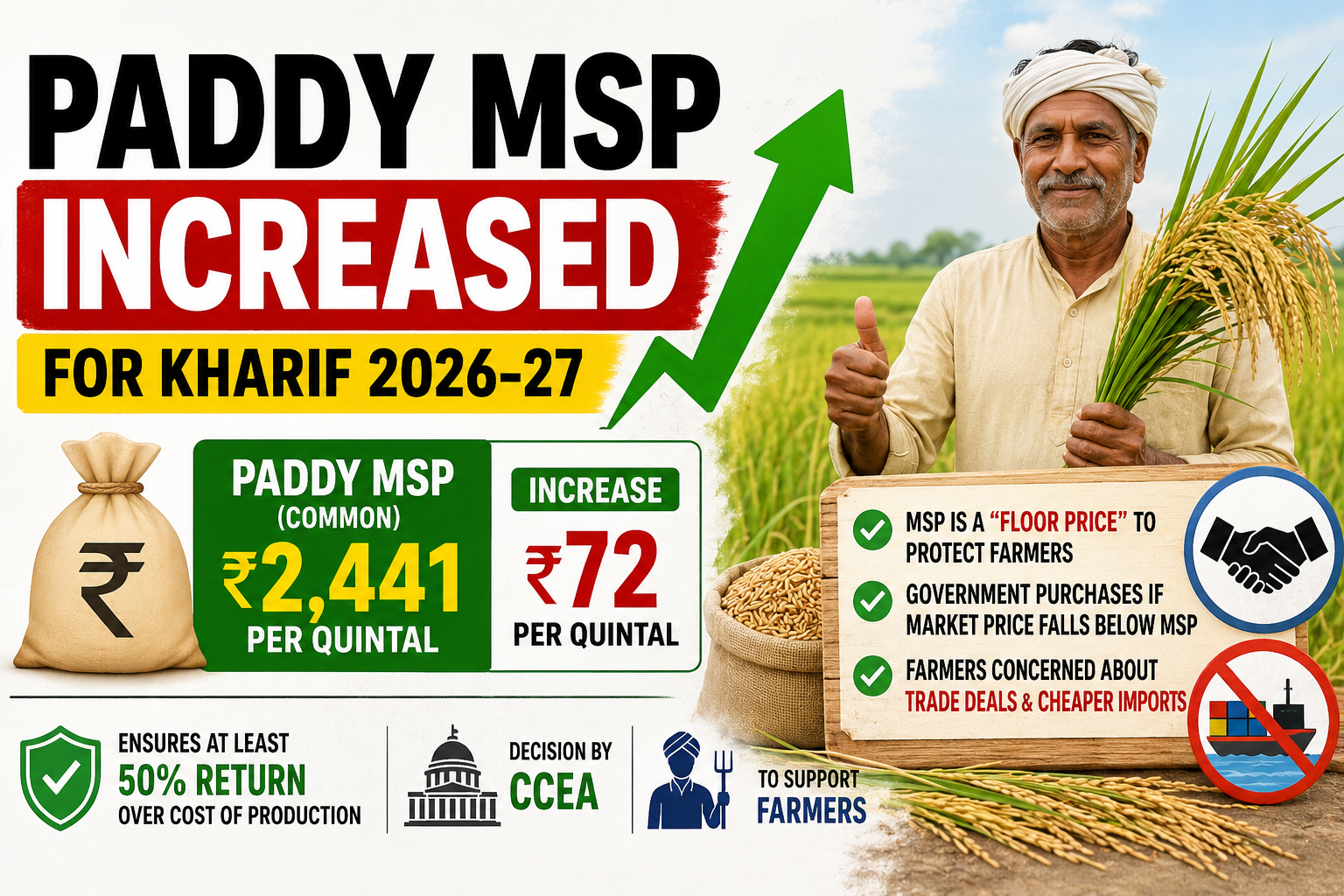
The Cabinet Committee on Economic Affairs (CCEA) has officially announced an increase in the Minimum Support Price (MSP) for Kharif crops for the 2026-27 marketing season.  Key Highlights of the Announcement Paddy MSP Increase: The MSP for 'Common' variety paddy has been increased by ₹72 per quintal, bringing the new rate to ₹2,441. A-Grade Paddy: The revised MSP for the A-grade variety of paddy is now ₹2,461 per quintal. Profit Margin Goal: Union Minister Ashwini Vaishnaw stated that these revised rates are designed to ensure farmers receive a return of at least 50% over the cost of production for each crop. Understanding the Concept: What is MSP? Definition: MSP is a "floor price" set by the government to protect farmers against any sharp fall in farm prices during bumper production years. Mechanism: If the market price falls below the MSP, government agencies purchase the produce from farmers at the announced rate. Kharif vs. Rabi: Kharif Crops: Sown at the beginning of the monsoon (e.g., Paddy, Maize, Bajra). Rabi Crops: Sown in winter (e.g., Wheat, Mustard). The Current Controversy: Trade Deals & MSP Despite the hike, several farmer organizations have expressed dissatisfaction. Their primary concerns include: Inadequate Buffering: Groups argue the hike does not sufficiently account for rising input costs. Trade Deal Impact: There is significant concern regarding the India-U.S. trade deal and other Free Trade Agreements (FTAs). Competition: Farmers fear that these international agreements might lead to a "disastrous impact" by allowing cheaper agricultural imports to enter the Indian market, potentially rendering the current MSP rates insufficient to protect local livelihoods. Quick Facts for Students Decision Body: Cabinet Committee on Economic Affairs (CCEA). Recommendation Body: Commission for Agricultural Costs and Prices (CACP) — Note: The CACP recommends, but the CCEA takes the final call. Season: Kharif 2026-27.
UP Promotes Cow Dung Economy

UP Promotes Cow Dung Economy

05 May 2026
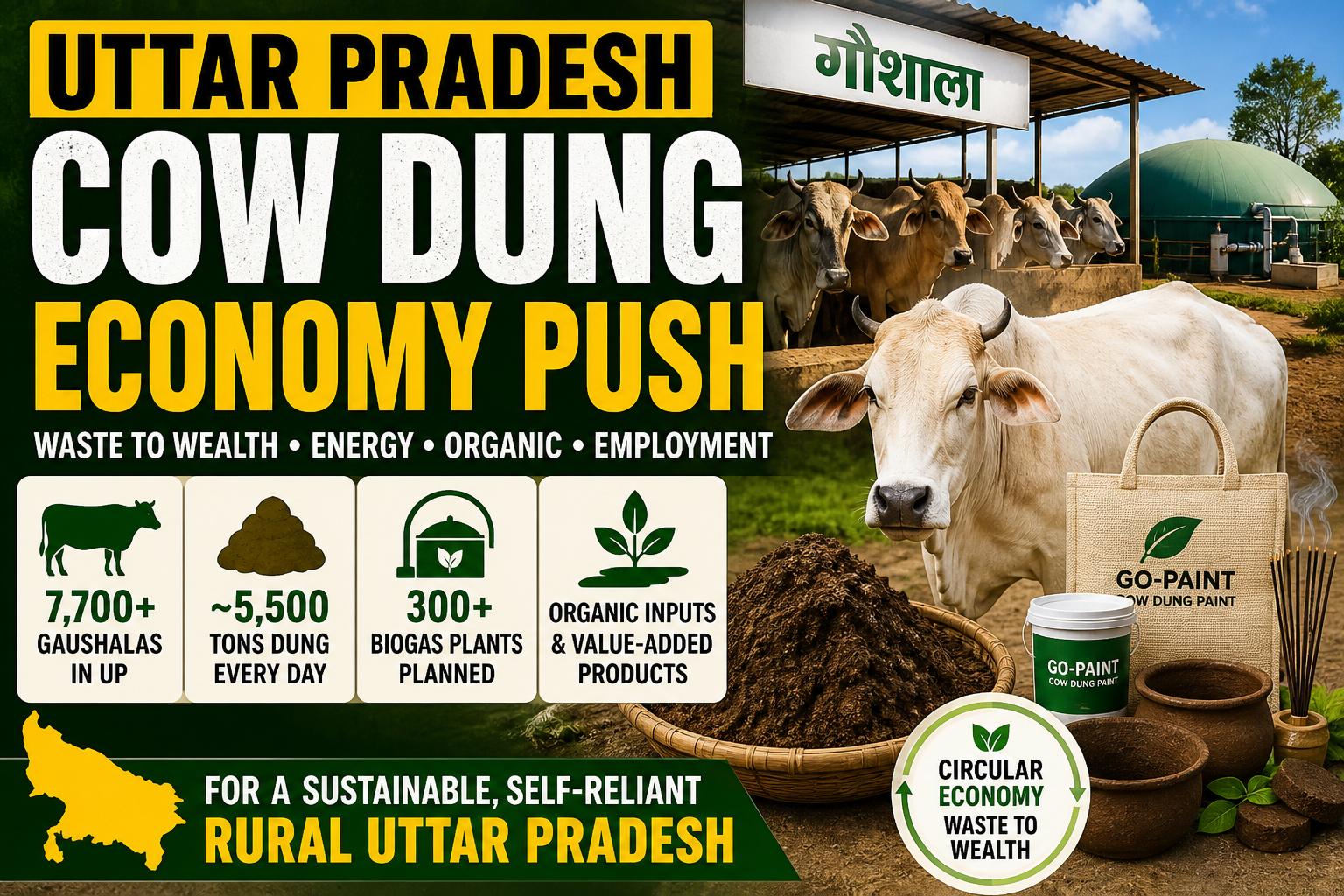
1. Key Facts Latest Development (Date): May 5, 2026Animal Husbandry Minister Dharampal Singh chaired a high-level meeting and directed preparation of a comprehensive action plan for statewide expansion. Objective:Integrate animal husbandry with agriculture, make gaushalas self-reliant, increase farmer income, improve soil health, and promote waste-to-wealth model. Gaushalas in Uttar Pradesh:~7,700 gaushalas (increased from ~100 in 2017)Housing 11+ lakh cows Daily Cow Dung Availability:~5,500 tons/day (≈ 54 lakh kg) Biogas Initiative: Plan to install biogas plants in 300+ gaushalas Outputs: Bio-CNG, electricity, organic manure Natural Farming Expansion: ~94,000 hectares under cow-based natural farming 23,500 hectares in Bundelkhand (7 districts) Additional expansion planned along the Ganga belt ₹2,500 crore allocation (2025–26) Value-Added Products from Cow Dung: Go-Paint (cow dung paint) for government buildings Organic pots (polythene replacement) Incense sticks Vermicompost Jeevamrit, Ghanjeevamrit, Panchgavya Dung logs & bioplastics Implementation Agencies: Animal Husbandry Department Agriculture Department UP Gau Seva Aayog Cooperatives, SHGs, NGOs 2. Components of the Initiative (A) Energy & Fertilizer Production Biogas plants for clean energy Organic manure production from dung (B) Sustainable Agriculture Inputs Jeevamrit, Beejamrit Promotion of Zero Budget Natural Farming (ZBNF) (C) Livelihood Generation Rural employment via gaushala-based units Focus on women SHGs & rural youth (D) Market Linkage System Quality certification and standardization Cooperative-based marketing Government procurement (e.g., Go-Paint for offices) 3. Significance & Benefits Economic Benefits Increases farmer income Reduces dependency on chemical inputs Promotes rural entrepreneurship Makes gaushalas financially self-sustainable Agricultural Benefits Improves soil fertility and organic carbon content Reduces chemical fertilizer dependency Promotes sustainable farming practices Environmental Benefits Methane capture → clean energy Waste management improvement Reduction in pollution and plastic usage Social & Cultural Benefits Strengthens cow protection-linked economic model Promotes rural employment Aligns with Atmanirbhar Bharat and circular economy 4. Analysis (Mains-Oriented) Positive Aspects Strong example of circular economy model Converts waste (cow dung) into: Energy Fertilizer Industrial products Supports multiple SDGs: Zero Hunger Climate Action Decent Work Responsible Consumption Supports doubling farmer income strategy Culturally rooted yet economically modern Challenges Collection issue: Stray cattle dung management is difficult Infrastructure cost: Biogas and processing units require high investment Market limitation: Weak demand without strong awareness Quality control: Standardization of products required Scalability issue: Expansion across 75 districts needs coordination Way Forward Strengthen SHG + cooperative ecosystem Integrate with national schemes (Biogas, Natural Farming Mission) Invest in R&D for high-value products (bioplastics, bio-chemicals) Improve digital marketing & branding of cow-based products Expand skill development programs in rural areas 5. Exam Relevance Prelims Numbers (gaushalas, dung production, area under natural farming) Schemes and initiatives State-specific facts (UP) Mains Rural economy transformation Sustainable agriculture Livestock-based economy Circular economy model Environmental sustainability Essay / Interview Topics “Waste to Wealth Model in India” “Cow-Based Economy and Rural Development” “Sustainable Agriculture in India” 6. One-Liner Revision 👉 In May 2026, Uttar Pradesh advanced a cow dung economy model using 7,700+ gaushalas to convert ~5,500 tons/day of dung into biogas, organic inputs, and value-added products for promoting sustainable rural development and circular economy.